


Russian Blocks – origin of the name
“…people say they are called after the Russians, after Russian plans. But it’s still not certain. They also say ‘Russian’ because they were red. When they were built, they were red – rosso, red in Italian. It might come from that. Even today I don’t know what the essence of these Russian blocks is. Russian plans, at that time there was communism and all that.”
(TZ, workshop on life in the Russian Blocks, July 2023)
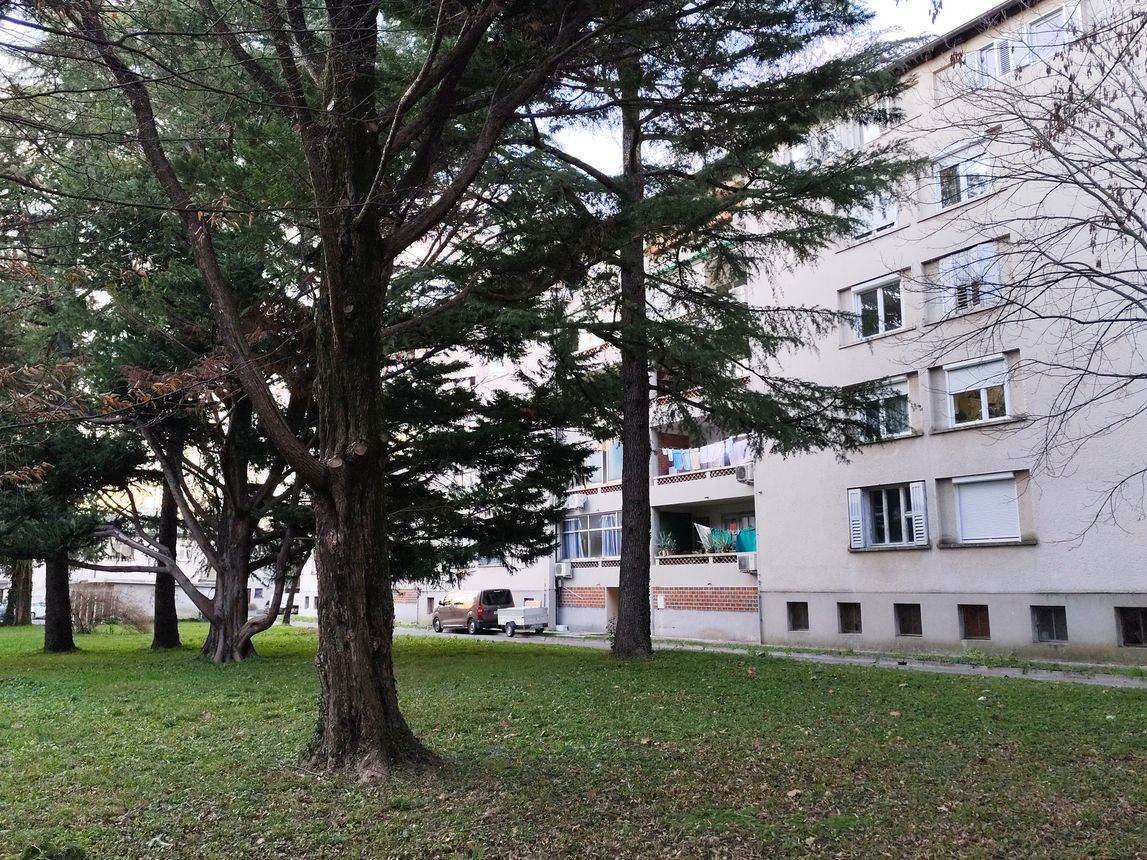
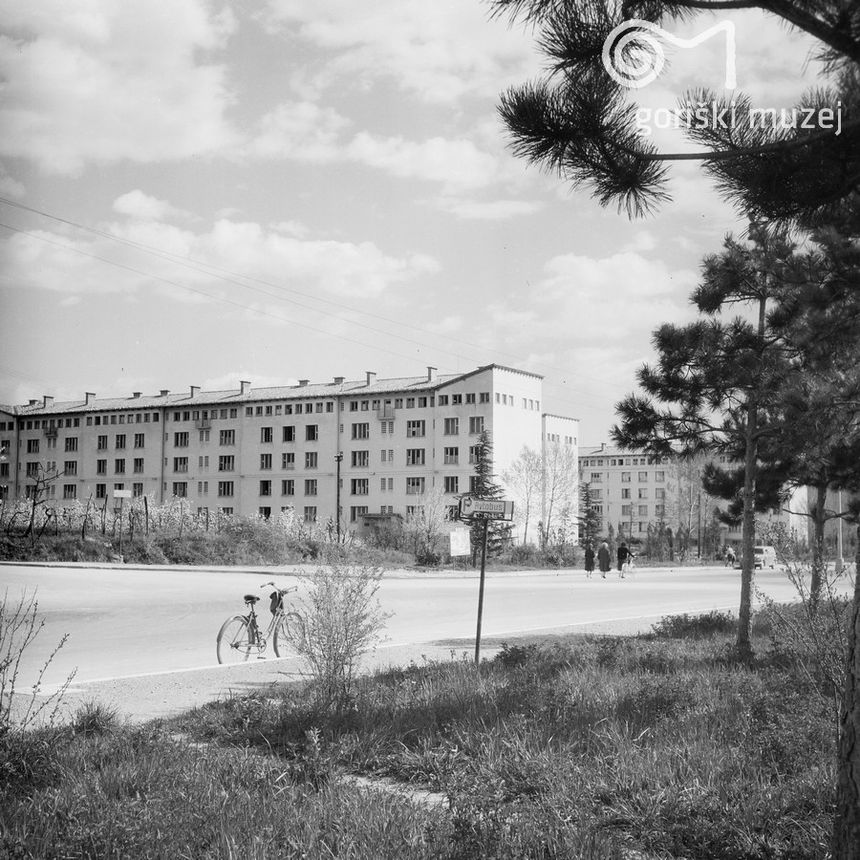
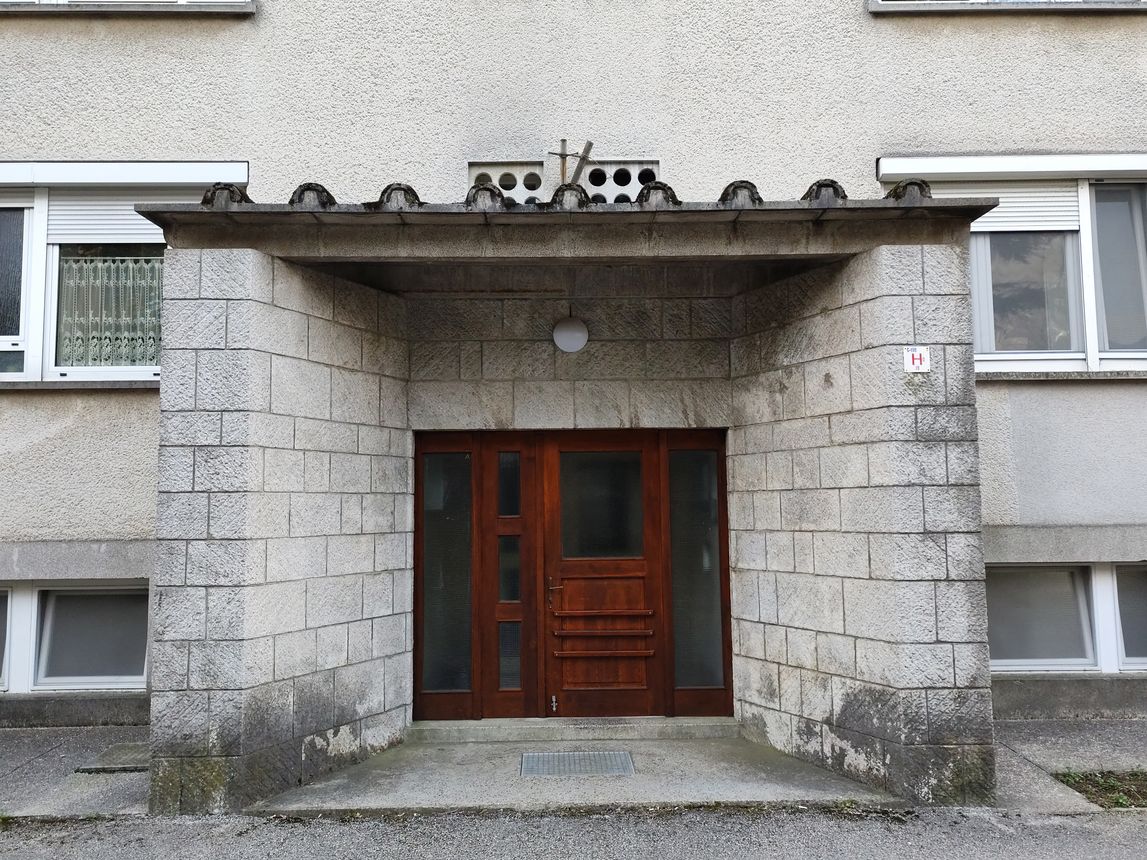
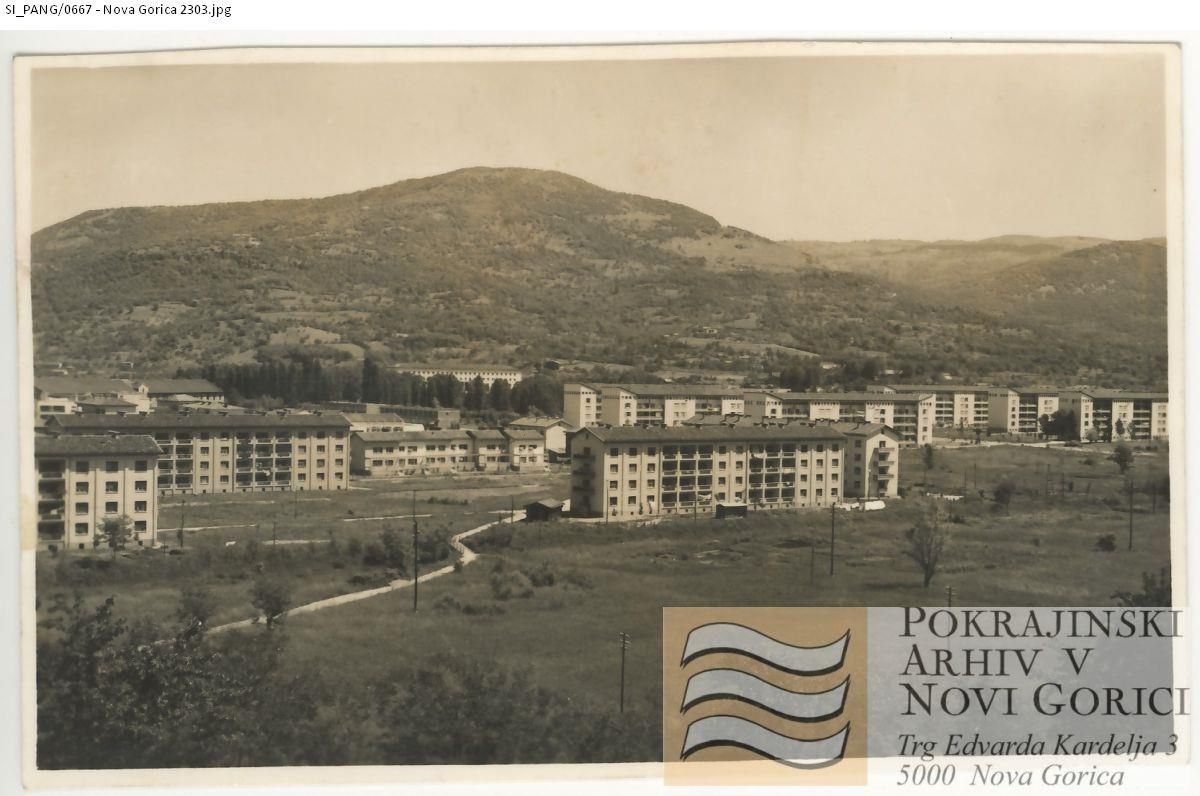
The Russian Blocks, referred to in conservation discourse also as the Ravnikar Blocks (Di Battista 2021), were the first residential buildings in the new town. The foundation stone for their construction was laid on 13 June 1948, a date that is today considered the founding day of Nova Gorica and is marked as a local holiday. A commemorative plaque on Block 13 (Kidričeva Street 33) recalls this event.
They were built according to the plans of the architect Edvard Ravnikar (1907–1993), who envisaged six blocks on the northern and six on the southern side of the Magistrala (today Kidričeva Street). The blocks were numbered from north to south, first along the western and then along the eastern side of the street. However, construction proceeded in the opposite direction – from the south (near the Koren stream) towards the north (towards today’s municipal building). Thus, Block 13 was built first, followed by Blocks 12 (Kidričeva 31) and 11 (Kidričeva 29), and then Blocks 4, 5 and 6 (Kidričeva 34, 32 and 30). Blocks 1–3 and 7–9 were never built.
The first residents moved into Block 11 in 1950. In the same year, the remaining five blocks were completed, although they were far from finished at the time of occupancy. External plastering was carried out only in 1955, which meant that for several years the buildings remained in the raw red colour of exposed brick.
According to one interpretation, this is precisely the origin of the name Russian Blocks – in local dialect, the word rusa refers to the colour red (Di Battista 2021: 60). Another explanation situates the name within the broader cultural and political context of the time. In the period before 1948, the term “Russian” symbolised something powerful, vast and progressive (TZ, May 2024). At the same time, architects – including Ravnikar – engaged with and at times praised Soviet architecture as a socially responsive practice (Ravnikar 1948; cf. Malešič 2015: 112). However, they soon distanced themselves from socialist realism and began to develop new architectural approaches suited to the emerging context (Malešič 2015: 115).
Regardless of the origin of the name, the Russian Blocks were considered above-average housing for their time. Spacious, bright and functionally designed apartments, with balconies and dual orientation, were exceptional and described as “comfortable bourgeois apartments” (Vuga 2018: 110).
Today, the Russian Blocks represent an important part of Nova Gorica’s heritage – not only as architectural objects, but also as a space of collective life. A new community was formed here, composed of people arriving from different parts of Yugoslavia. Within a single block one could find teachers, doctors, artists, architects and other key social groups who contributed to the making of the new town.
As recalled by a former resident of Block 11 (born 1952), it is precisely this social dimension that is essential:
“Given that these were among the first blocks, they are important. They are important because a generation from all parts of Yugoslavia, or Slovenia, gathered here. In Gorizia there was nothing. There were no teachers, no doctors. In one block you had the entire social structure. People came from everywhere. These were our parents. /…/ Then you had the first Slovenian painters, artists, well-known musicians, well-known architects and so on. A new generation was being formed. In an old town you don’t notice this, here it was very evident. The heritage is different. Intangible heritage is more present and more visible here. Especially because we are a generation that grew up in a different system. Wealth was not displayed, because there was none. Someone might have bought a television earlier than others, because they had a bit more money. But life was different. In other towns you had old bourgeois families, elites. Here, this intangible heritage is more present and more evident.”
Avtor: Jasna Fakin Bajec
Kraj: Nova Gorica