


Municipal building - mosaics
1 / 9
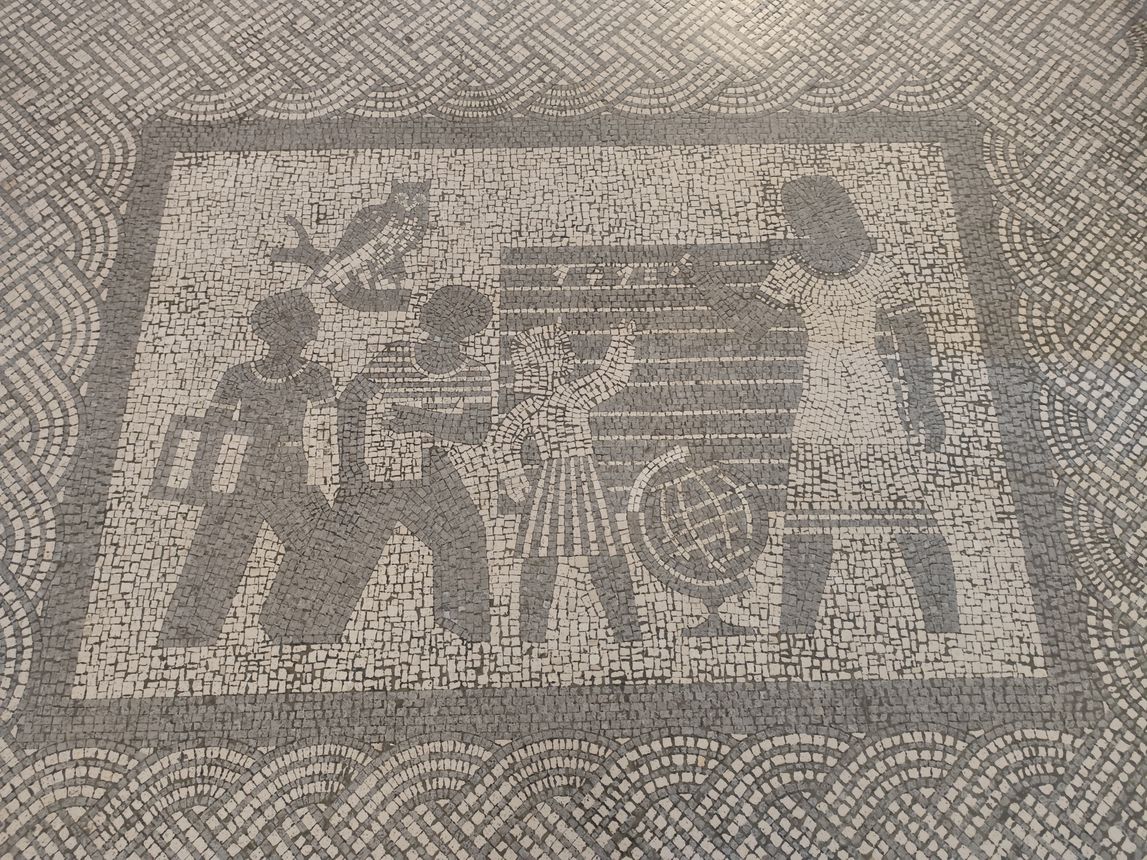
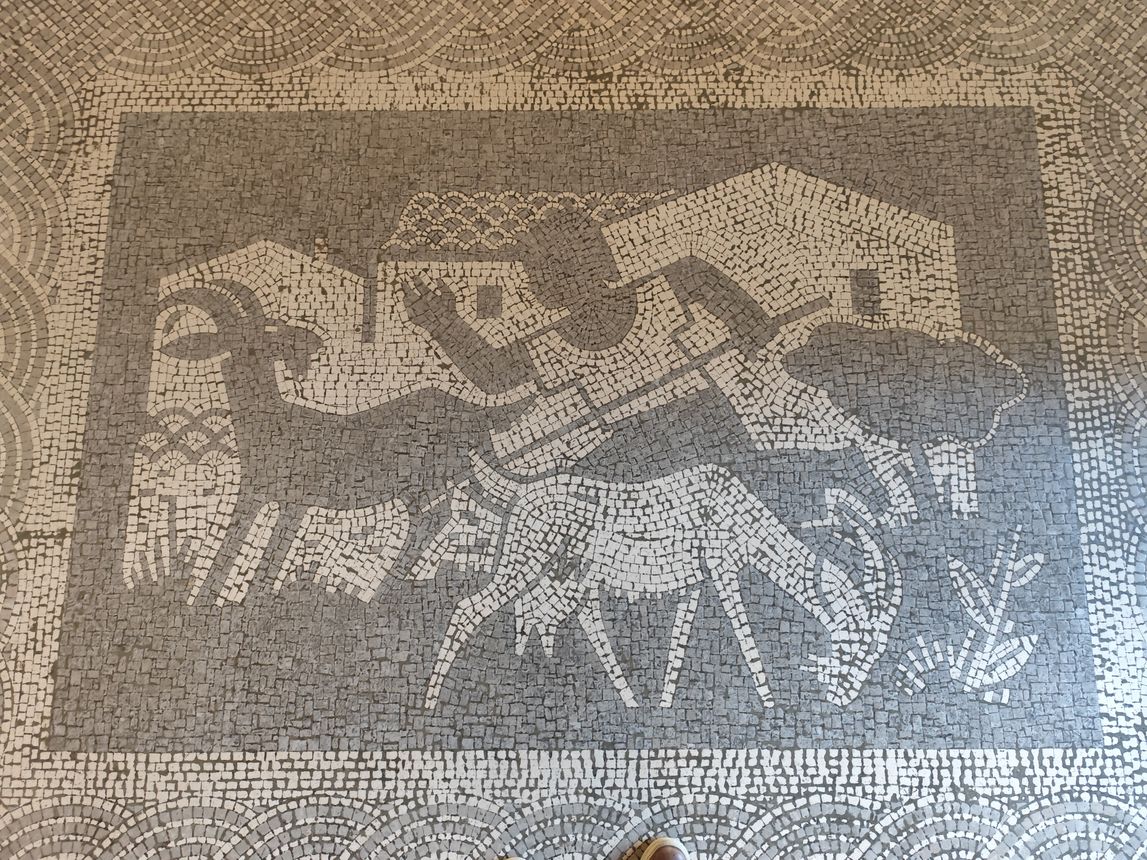
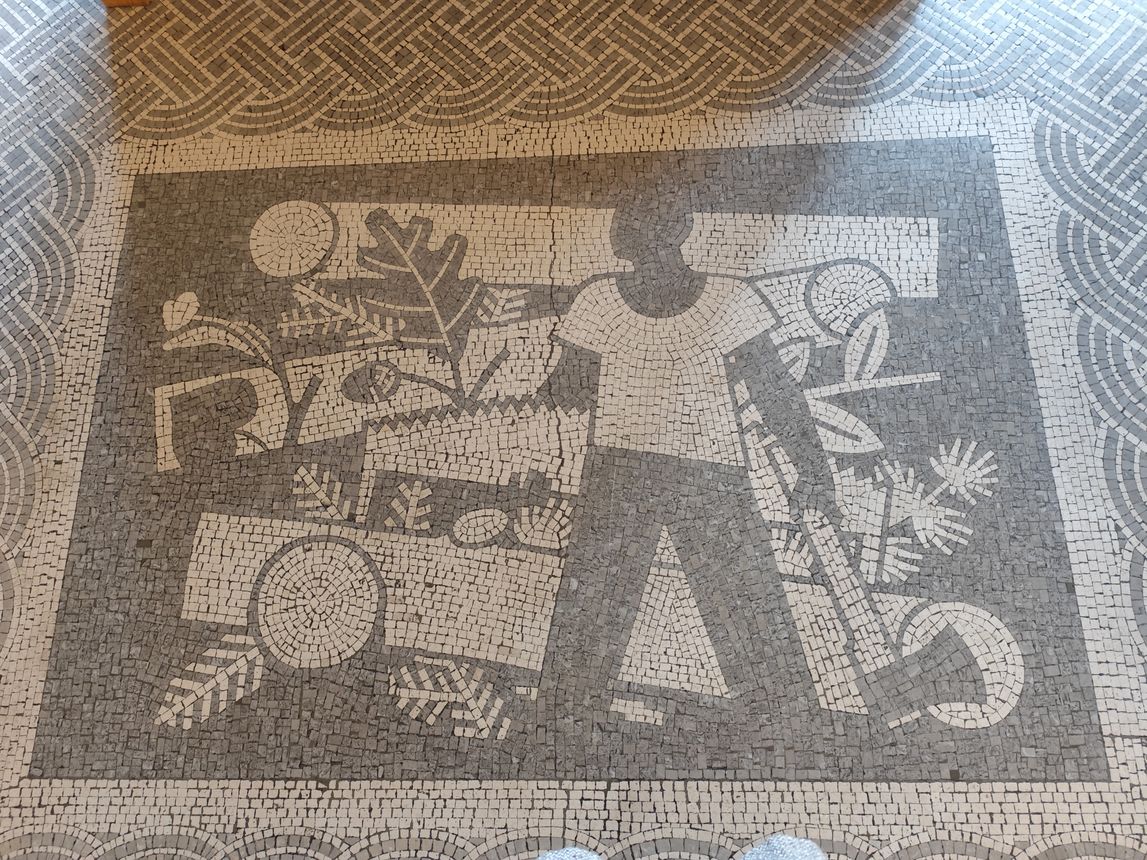
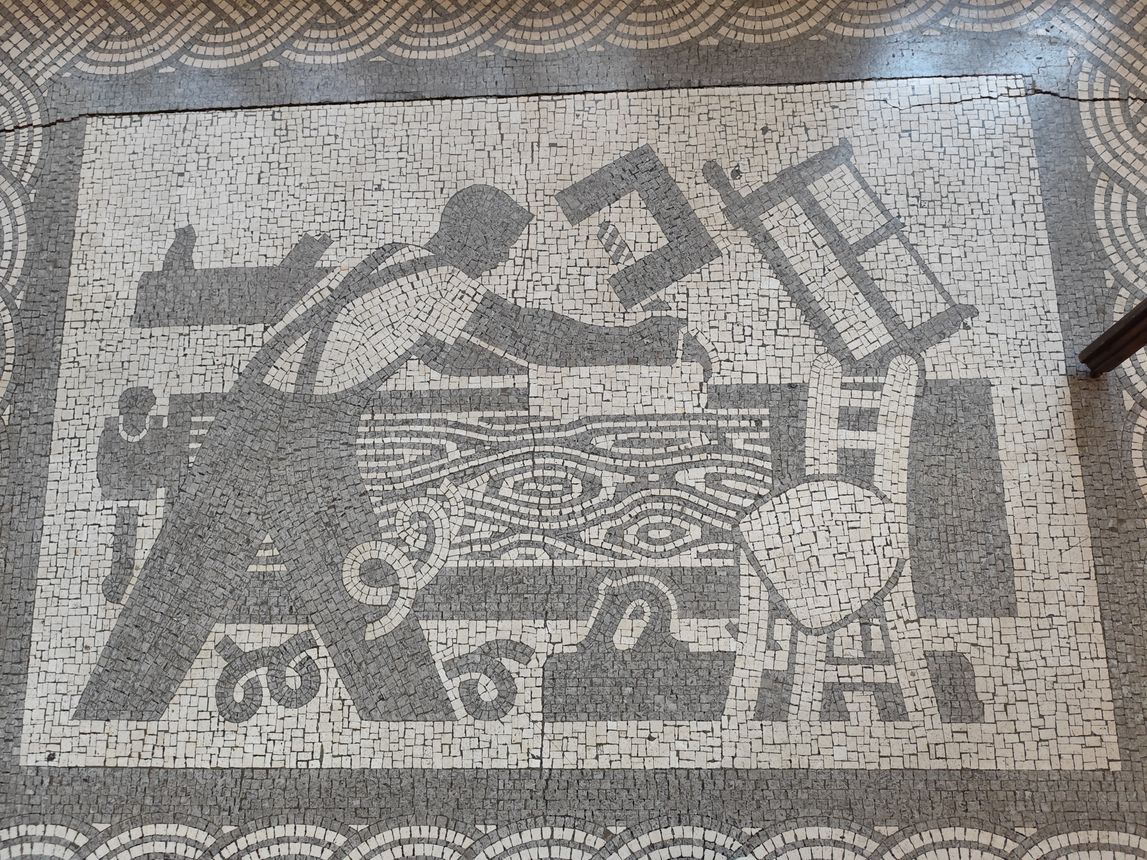
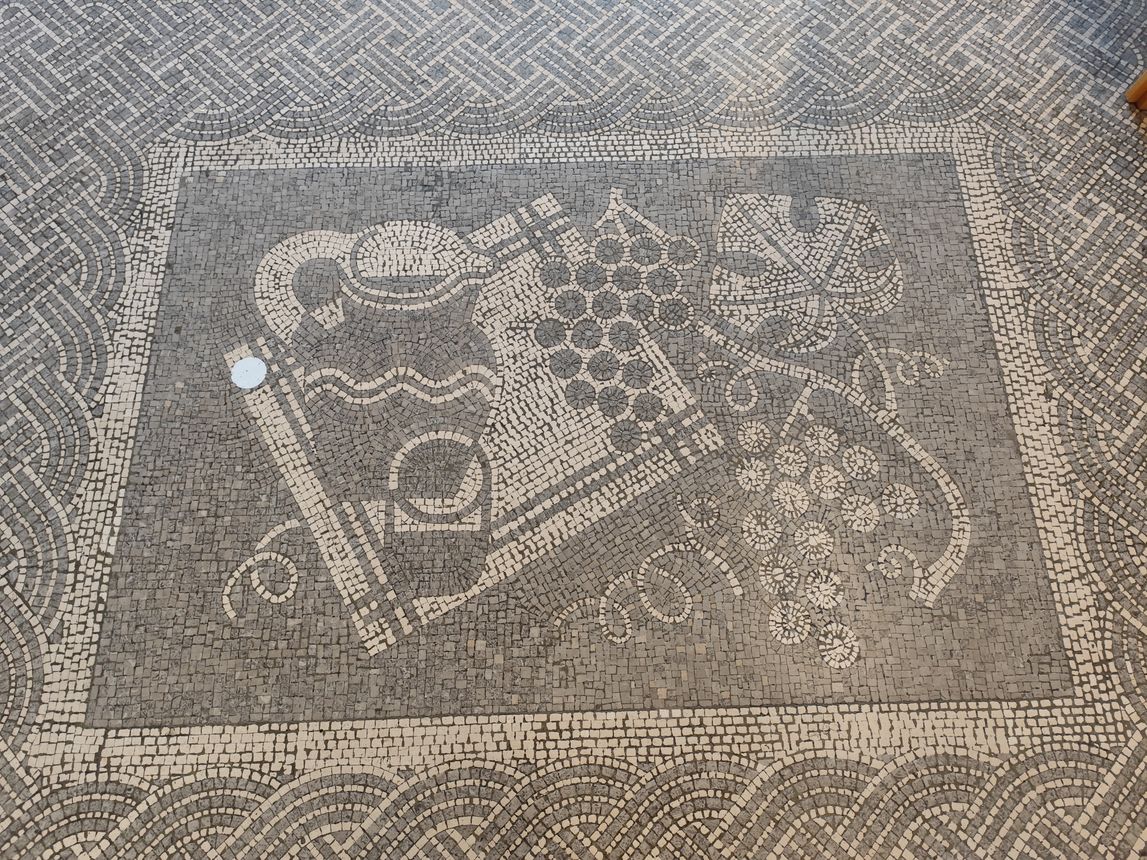
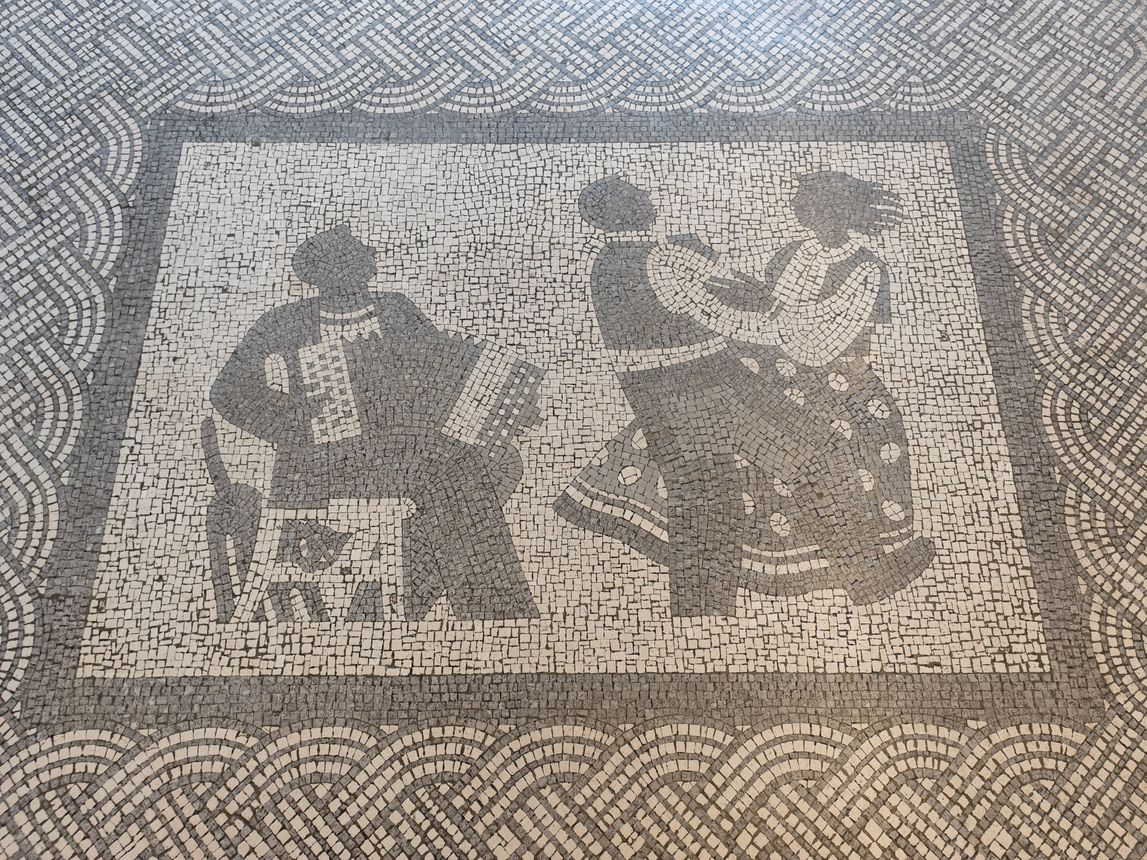
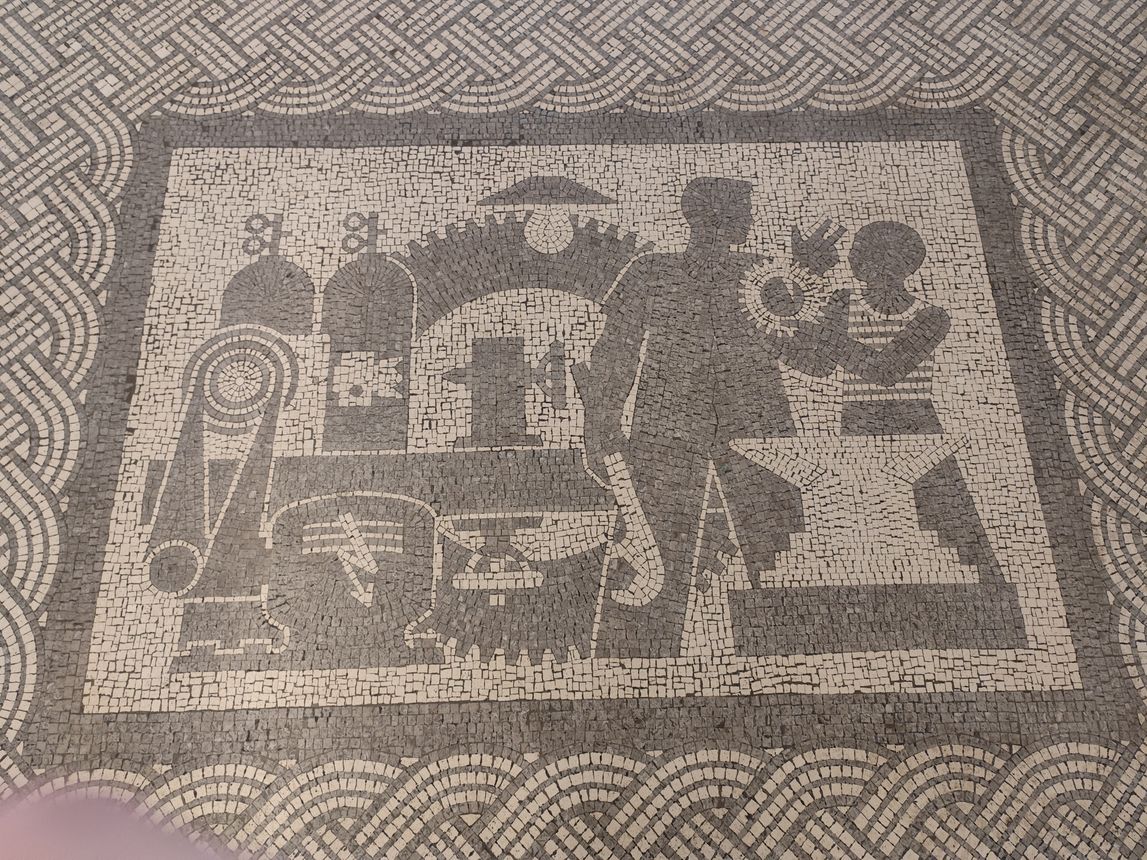
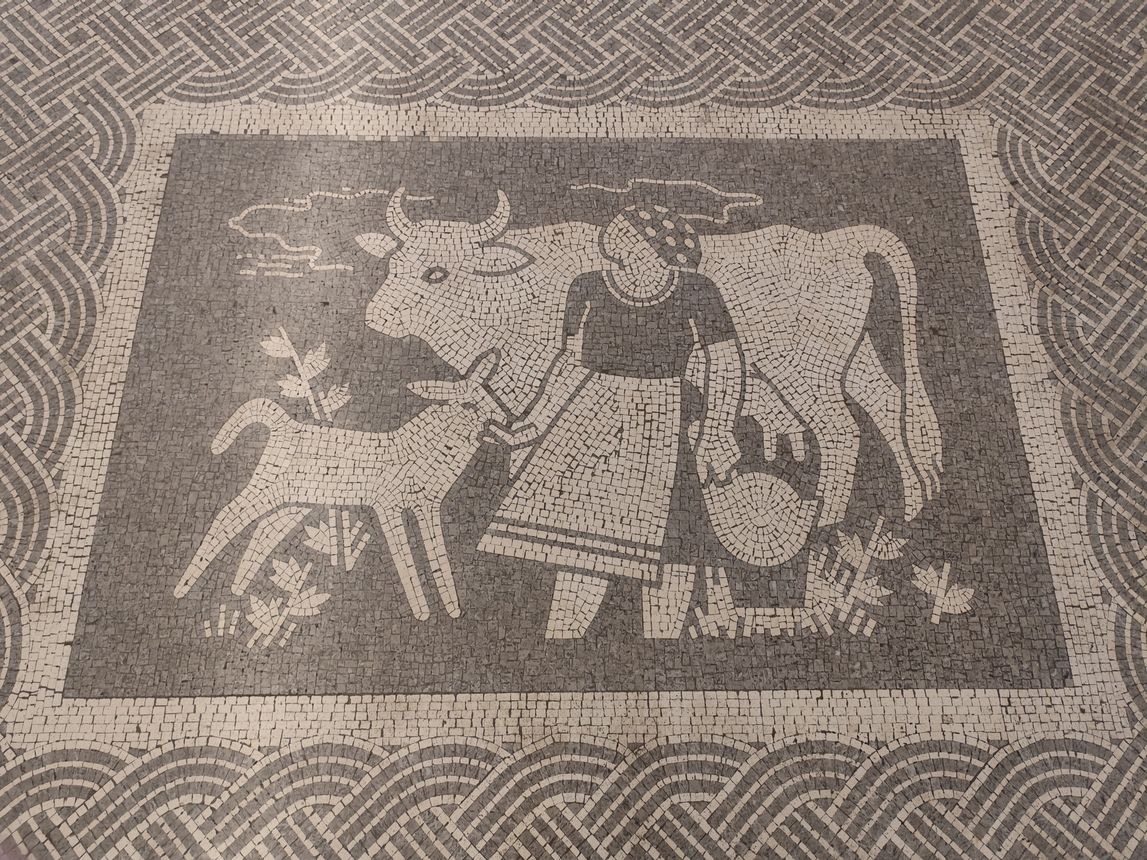
Allegorical motifs designed by Tone Žnidaršič (1923–2007), mosaics executed by Alfio Tambosso–Ultra. Municipal atrium. Photo: Blaž Kosovel..
2 / 9
3 / 9
4 / 9
5 / 9
6 / 9
7 / 9
8 / 9
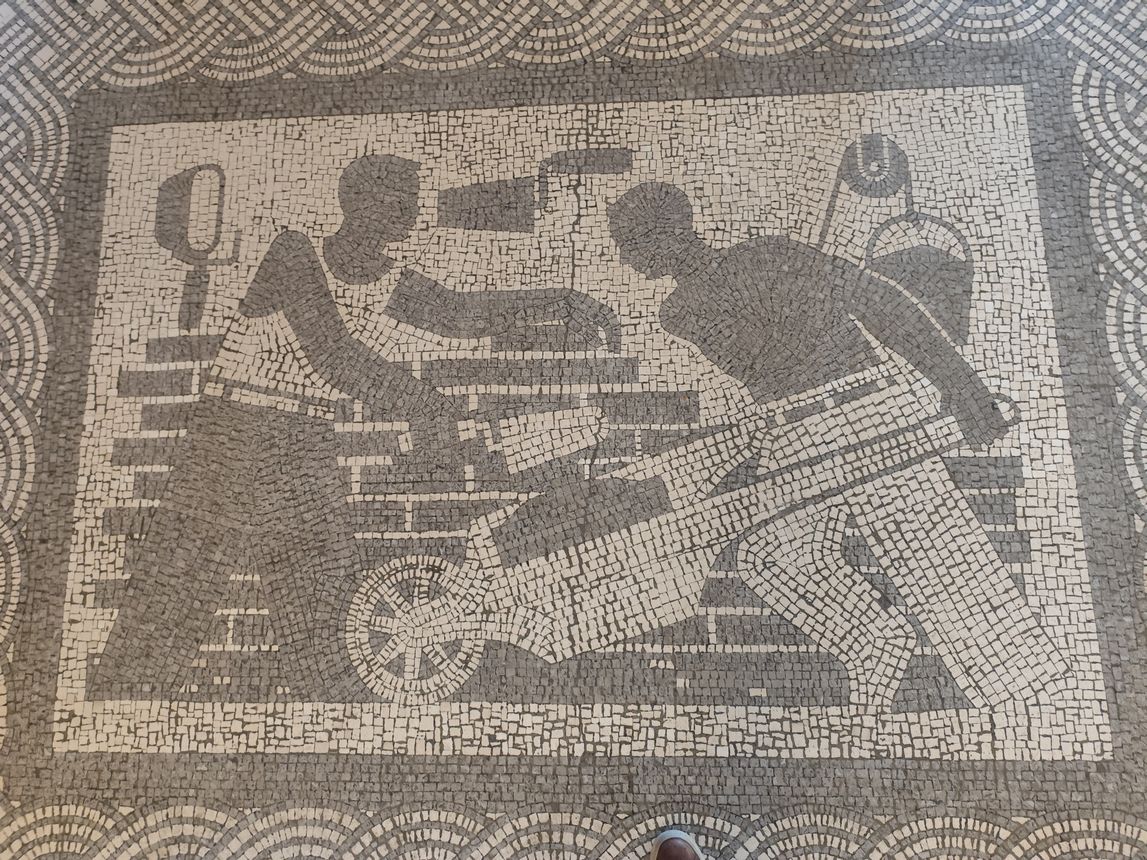
The allegorical motifs were designed by Tone Žnidaršič (1923–2007), while the mosaics were executed by Alfio Tambosso–Ultra. Municipal atrium. ©Photo: Blaž Kosovel
9 / 9
The interior of the municipal building is enriched by numerous art-historical details, including mosaics on the ground floor depicting ways of life in the new socialist state.
Alongside its modernist architectural style—characterised by concrete, simplified forms, and a reduction of ornament—the building’s interior is also defined by an iconography that emphasises the importance of the National Liberation Struggle and the construction of a new collective socialist identity, values, and norms in post-war Yugoslavia. This iconography is particularly evident in the main hall in front of the large assembly room, where rectangular mosaic panels can be viewed.
Art historian Katarina Mohor notes in the book The Municipal Building in Nova Gorica (2019):
“Mosaics symbolise peace, abundance and prosperity; work in agriculture and industry; the construction of new cities; the importance of voluntary labour; the role of women and mothers; education and learning; as well as leisure and entertainment.”
The mosaics were designed by the painter, sculptor, and illustrator Tone Žnidaršič, a member of the first generation of academically trained artists at the Ljubljana Academy. Monumental art formed an important part of their education, intended to contribute to social transformation and the consolidation of a new political system. Due to its durability, resilience, and the value of its materials, mosaic was considered one of the most prestigious techniques of monumental art.
As the technique had no strong tradition in Slovenia, the mosaics were executed—based on Žnidaršič’s designs—by Alfio Tambosso–Ultra (1914–1992), an émigré from Italy who had trained at one of the most renowned mosaic schools in Spilimbergo. As one of the few specialists in this field, he and his workshop carried out many such commissions across Yugoslavia. He personally executed the more demanding sections (faces, details), while his brother assisted with the less complex parts.
Together, they produced mosaic works for Vila Bled, the National Assembly building in Ljubljana, the Workers’ Hall in Trbovlje (1957), the memorial complex in Kampor on the island of Rab (1954), and compositions for the Federal Executive Council building in Belgrade (1962) (Di Battista and Mohor 2019: 38–39).
Avtor: Jasna Fakin Bajec
Vir:
- Di Battista, Alenka in Mohar, Katarina. 2019. Občinska stavba v Novi Gorici, Ljubljana: Založba ZRC SAZU, str. 38-39.

Tags
Povezani članki
Municipal Building of Nova Gorica