


Soča river
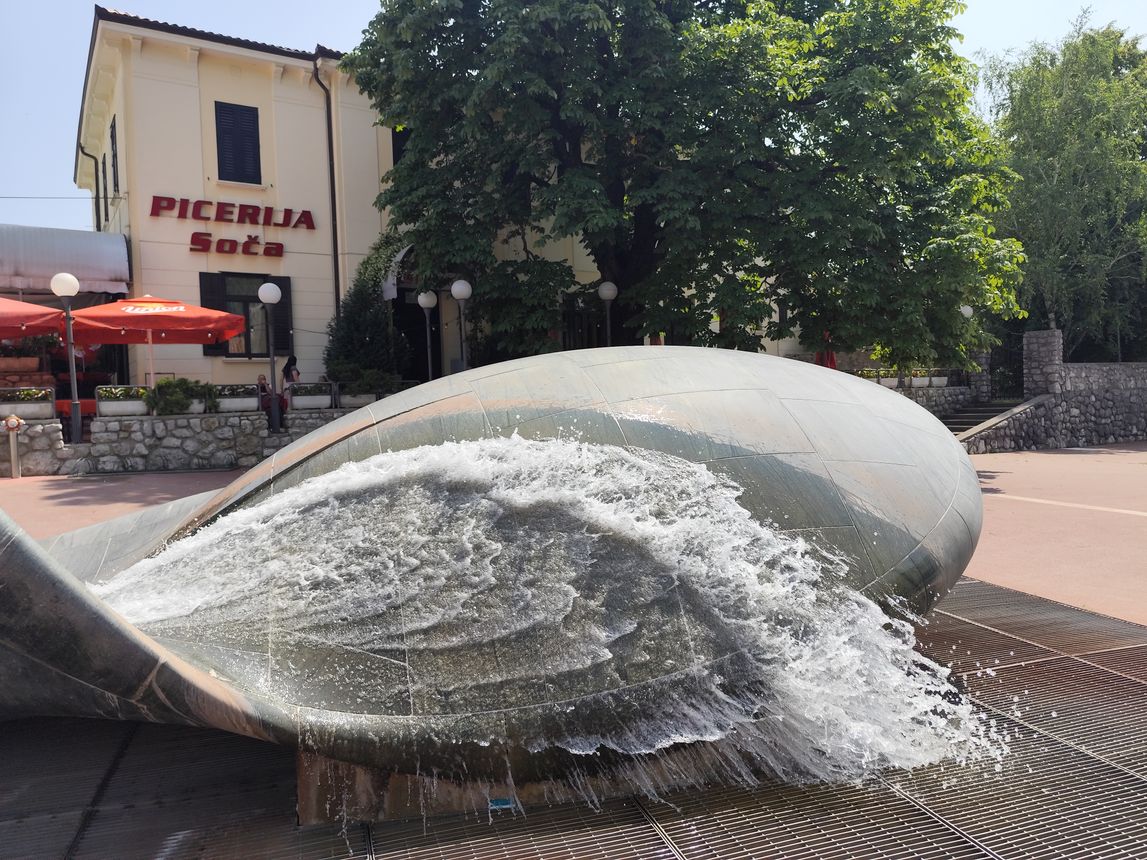
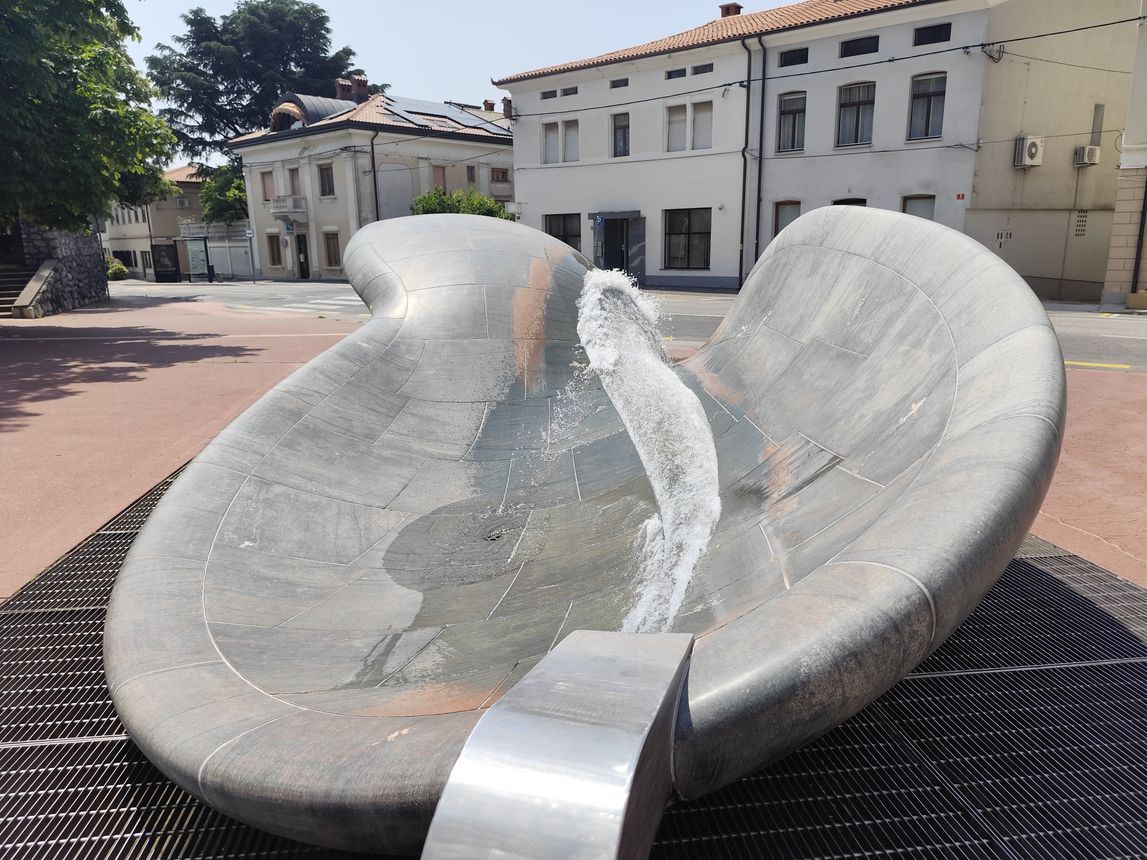
The Soča River rises in the Trenta Valley in the Julian Alps. It first flows through the narrow Soča Valley, which opens into a wider plain near Solkan, and after 137 kilometres it empties into the Adriatic Sea. It has a distinctive green-blue colour, which is why it is often referred to as the “emerald river” (although it is closer to turquoise). The Soča shapes and defines the Gorizia region, marking the intensity and sharpness of the transition between mountains and sea, while also bringing Mediterranean climatic influences as far as the foothills of the Alpine two-thousanders.
The Soča basin is home to the endemic marble trout (Salmo marmoratus), one of the largest trout species in Europe, recognisable by its marbled pattern and adapted to fast, clean waters. Due to hybridisation with introduced non-native trout, it was heavily threatened in the past; today, several conservation programmes are in place.
On the nearby alpine pastures, traditional dairy farming still takes place during the summer months. Local herders produce Tolminc, a hard cheese with protected designation of origin.
The river is also an important site for sports activities. In its upper course, the Soča is one of the most recognisable and popular European rivers for whitewater kayaking. Rafting is mainly organised in the summer months, when water levels are more stable, while in spring the river becomes stronger and faster due to snowmelt.
The river also plays an important role in energy infrastructure. Three hydroelectric power plants (Solkan, Plave, Doblar) operate along its middle and lower course. These have significantly shaped the river’s flow and regime, while also raising questions about the balance between energy production and environmental preservation.
The cement plant Salonit Anhovo operates along the Soča and used asbestos for decades, leaving serious consequences for the health of the local population. The area remains one of the key environmental hotspots in Slovenia, today primarily due to waste co-incineration and long-term industrial pressure.
The valley was the site of the Isonzo Front during the First World War (pp. 12–13), one of the largest mountain battles in history. Due to the enormous number of casualties, it became a “sacred river” in Italian ideological narratives.
As early as 1879, the local poet Simon Gregorčič (1844–1906) prophetically anticipated the valley’s bloody fate in his poem To the Soča:
“You are splendid, limpid daughter of the heights,
You are graceful in your natural beauty
When your transparent depths
are not disturbed by the
Wrath of darksome storms.
-.-.-.-.-
Bitter steel will strike these lands,
And you will flow full of blood.
Our blood will nourish you,
the enemy’s will muddy you!”
Today, the Path of Peace follows the entire front line, and the award-winning Kobarid Museum (Gregorčičeva ulica 10) is dedicated to the Soča Front.
Avtor: Blaž Kosovel
Vir:
https://www.thewalkofpeace.com/