


Youth Work Brigades in Nova Gorica – the lives of the brigadiers
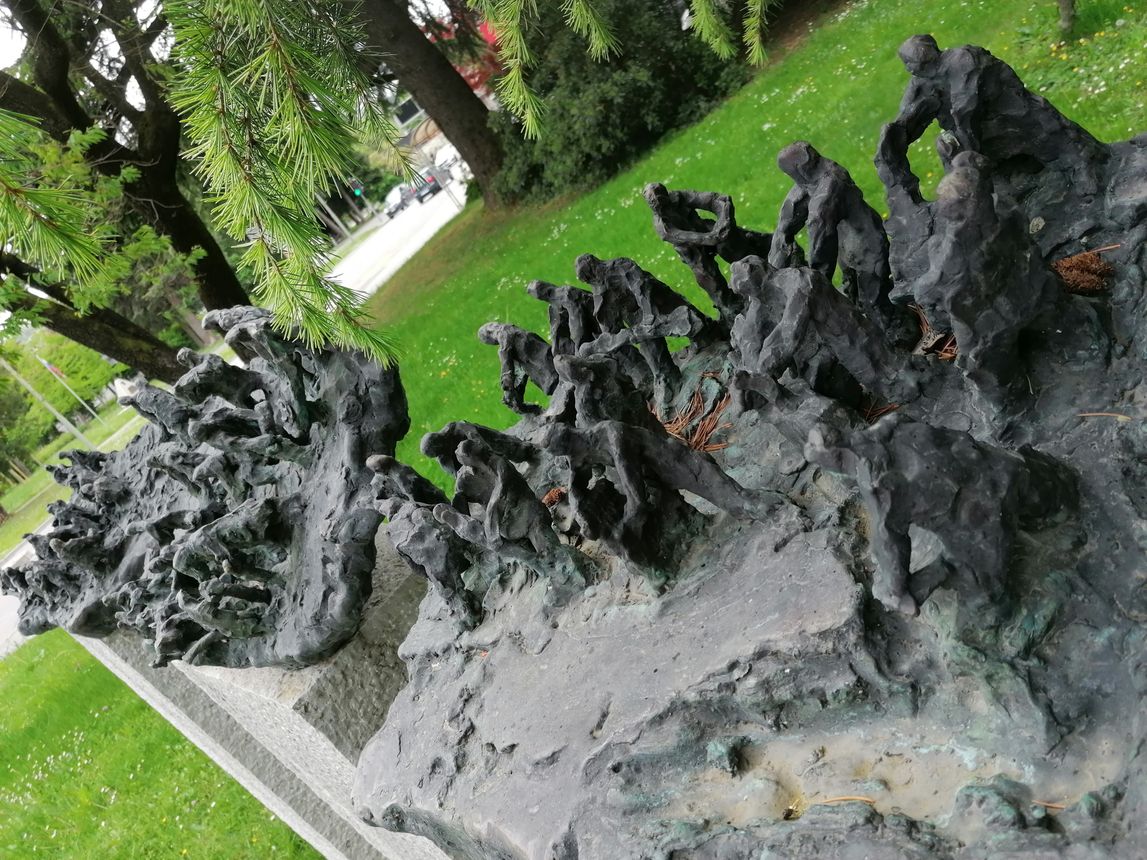
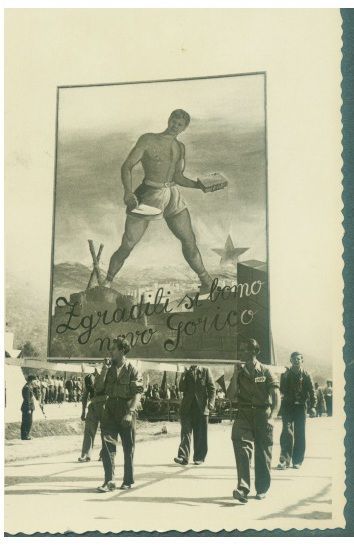
Work, song, competition, and political charge … all of this marked the lives of young people within the youth work brigades.
“For several days now, everything around the building and in the brickworks in Gorizia has been alive with activity. Have they started firing bricks, perhaps the factory has begun operating? No! The bricks are not being fired, nor is the factory operating. Youth from various places, from districts across all of Tito’s Yugoslavia, have come to create and to build.”
(Mladina, 13 December 1947, no. 50)
The young men and women who enthusiastically began preparing the area for the construction of Nova Gorica came from all over Yugoslavia. The action was considered a federal shock-work campaign of the youth work brigades, joined by young people from Serbia, Montenegro, Macedonia, Bosnia and Herzegovina, Croatia, and Slovenia.
The brigadiers were housed in the old brickworks, which they called the camp. They had large indoor spaces, a huge courtyard, and a wooden hall where larger events were held. One brigade was also housed in Rožna Dolina, and another in Kromberk Castle (Ivanc 2008: 3).
“The company assigned to work in the camp is divided up. One group has to prepare the beds, another is tasked with cleaning the floors of the rooms, while tidying the courtyard and the warehouse is the task of the third work group.”
(Mladina, 13 December 1947, no. 50)
“Life in the brigadiers’ settlement took place according to strict, almost military order. The precisely determined schedule of work duties was disturbed only in the event of exceptionally bad weather, which in the entire period happened only once or twice. In the very modest, only makeshiftly arranged premises, order and cleanliness prevailed. The spaces for women and men were strictly separated, and socializing between them, except in the courtyard, was forbidden. Once, the camp duty officer caught a girl and a boy embracing in the washroom. The strictest, almost shameful punishment followed – expulsion from the work action!”
(Source: https://www.kamra.si/digitalne-zbirke/oskar-jogan/)
In youth work actions, labour was based on competition. Under the influence of the ideology that they were building a better and stronger socialist state, they competed over who would exceed the norm, not only in physical labour but also in educational, sporting, and political-educational fields. As a reward, they received special pennants made by members of the Anti-Fascist Women’s Front (AFŽ) from Solkan (Ukmar 2017: 128). Through loudspeakers, the headquarters announced work achievements every day, which further intensified the competition. Individuals were also praised. They also had ten-day sectional transitional pennants. A brigade received a ten-day work plan and pledged to complete it in eight or seven days. Each brigade also kept daily company transitional pennants. The effect of these competitions was considerable: they exceeded the norm by 10 to 20 percent.
“For the most part, we worked on earthworks for roads, bridges, and land drainage. I do not recall that at the construction sites where we worked there was any machinery for earthworks or any truck. Everything had to be done by hand, and all materials had to be transported in wheelbarrows!”
(Source: https://www.kamra.si/digitalne-zbirke/oskar-jogan/)
Yet youth work actions were not based only on physical labour and economic function. They were also places where youth cadres and comradeship were forged, places where young people could realize their interests, and an element in strengthening and spreading awareness of brotherhood and unity (Filipčič 2018: 26). For this reason, they devoted their free time to study circles and courses attended by cultural workers and students from Ljubljana and elsewhere. The illiterate learned to read and write. They had a stenčas (a printed textual and visual record of events pasted onto a wall for all to see), where they published articles. They also had their own newspaper, Brigadir. Three times a day they held radio broadcasts in which they announced daily achievements in Slovene, Croatian, and Italian (Ukmar 2017: 130). They also organized campfires, performances by choirs, reciters, dance groups, and accordion players. Young writers and visual artists presented their work, and various films were often screened. Sporting activity was also rich and was led by sports teachers. The brigadiers’ stadium was always lively. At the end of the fourth work shift, on 29 August 1948, the Main Headquarters of the Youth Work Brigades organized an exhibition of the brigadiers’ works and a rich cultural festival (Ivanc 2008: 7).
In the cultural and artistic field, the Kajuh Brigade was the best. In the final, fourth shift, five brigades of young men and women also took part who had remedial exams after the end of the school year. Special study courses were organized for these brigadiers. Some teachers also came to the work action to help them study.
Work brigades from surrounding places in the Primorska region, the so-called front brigades, also participated in the construction of Nova Gorica. They remained active in 1949 as well, when they replaced the youth work brigades. During the work action on 13 June 1948, when the construction of the first residential block began, more than 4,000 brigadiers took part in 76 OF work brigades. On that day, the foundation stone was laid for the construction of the first residential block.
The 30 youth work brigades that operated on the construction site of Nova Gorica (in addition, brigades also worked on the regulation of the Lijak stream and the construction of the Sežana–Dutovlje railway section) laid the foundations of the new town.
Avtor: Jasna Fakin Bajec
Vir:
- Filipčič, Rok. 2018. Brigadirski ho-ruk!: prva štiri leta mladinskih delovnih akcij v Brkinih 1975–1978, Prispevki za novejšo zgodovino LVI - 2/2016, str. 22-39.
- Ivanc, Jože. 2008. Spomini na začetke gradnje Nove Gorice: Govor ob odkritju spomenika graditeljem Nove Gorice, 6. septembra 2008. V: Oton Mozetič, mag. Darinka Kozinc, Melanija Kerševan (ur.), V spomin in zahvalo graditeljem Nove Gorice ob 60-letnici začetka gradnje. Nova Gorica: Krajevna skupnost Nova Gorica.
- Nova Gorica: Zgradili smo mesto, zapisi na portalu Kamra, https://www.kamra.si/digitalne-zbirke (ogled: 10. 10. 2014)
- Pred nami je gradnja Nove Gorice. Nove delovne akcije Ljudske mladine Slovenije. V. Marušič, Branko (ur.), Narodu Gorico novo bomo dali v dar: Ob sedemdesetiletnici Nove Gorice. Nova Gorica: Območno združenje Zveze borcev za vrednote narodnoosvobodilnega boja, str. 123-126.