


Treaty of Osimo
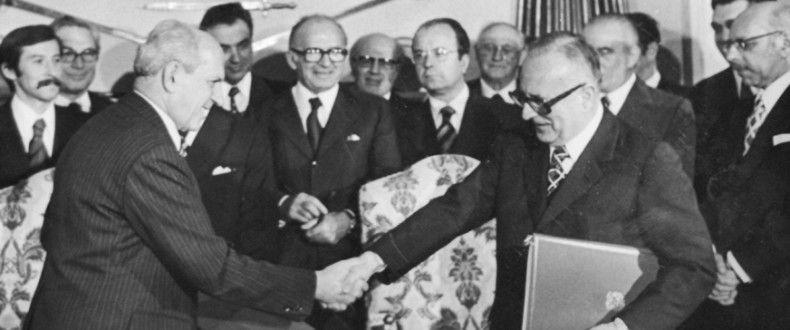
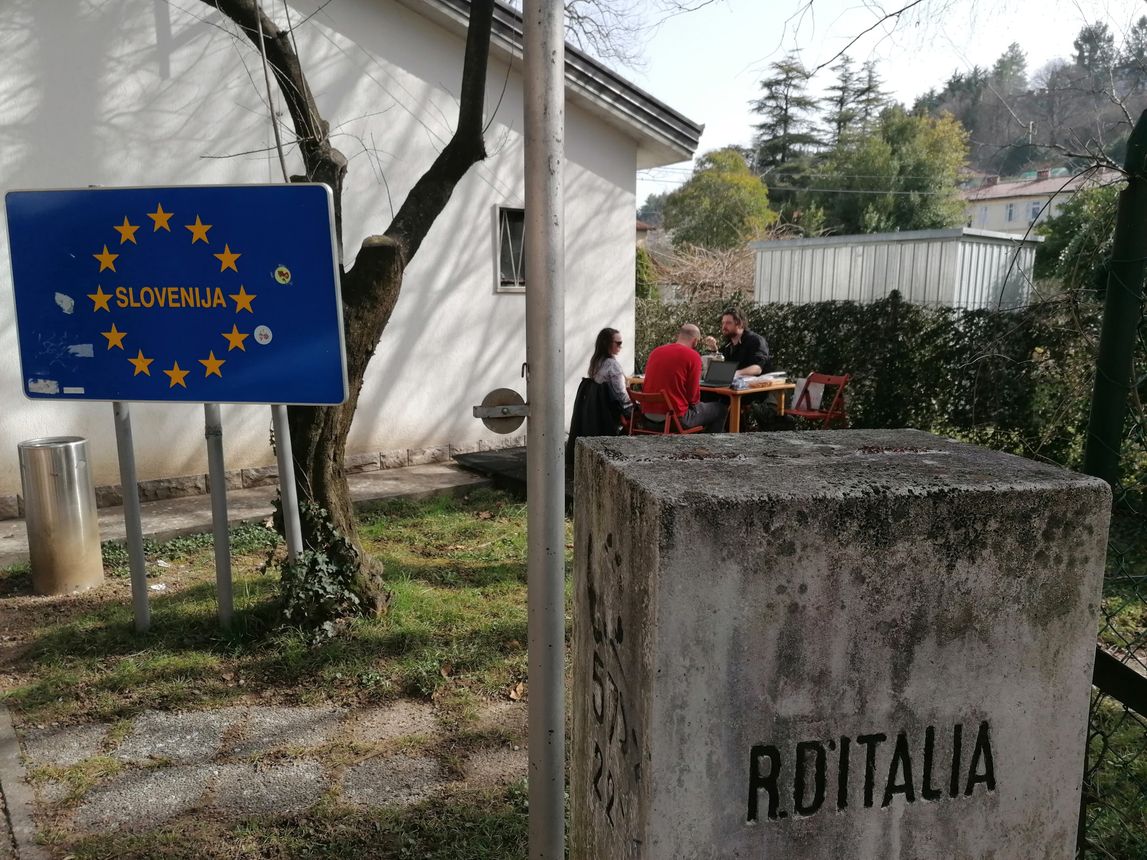
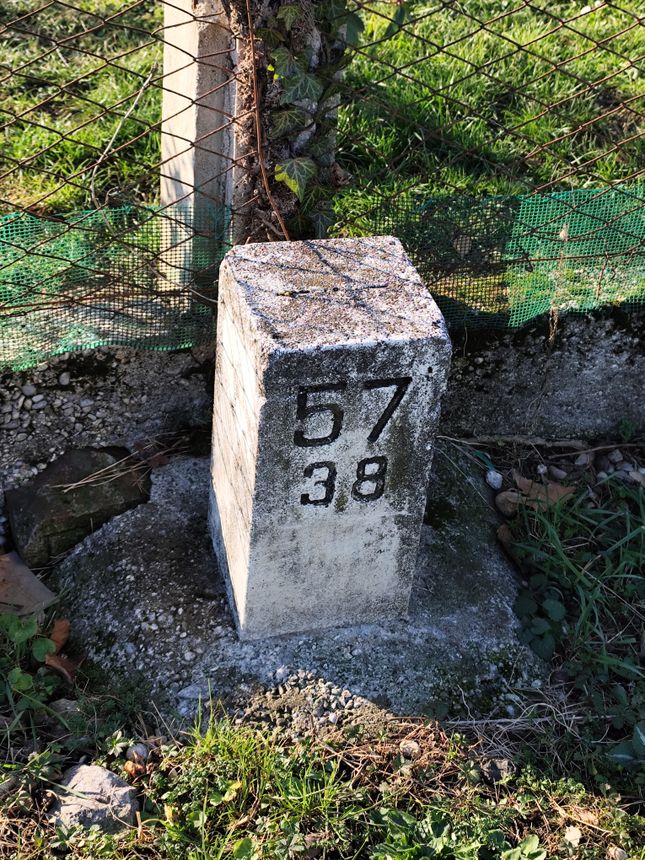
Friendly relations between Yugoslavia and Italy—and consequently between Gorizia and Nova Gorica—deepened during the 1970s. Negotiations to resolve outstanding issues between the two countries culminated in the Treaty of Osimo, signed in 1975 and ratified in 1977.
In July 1975, the Conference on Security and Cooperation in Europe (CSCE) took place in Helsinki, where European borders were declared inviolable. This significantly influenced Yugoslav-Italian relations. At the time, Yugoslavia was already facing internal political tensions and uncertainty about the post-Tito future. The border between Yugoslavia and Italy was also a NATO frontier, making its stabilisation strategically important, particularly for the United States. The border region was seen as a potential hotspot of Cold War tensions between East and West.
Negotiations were conducted in secrecy. Italy aimed to regain Istria, while Yugoslavia set three key conditions: final recognition of the border, legal protection for the Slovene minority in Italy, and strengthened economic cooperation. At the local level, Nova Gorica pushed for solutions to infrastructure issues, including the road to Goriška brda, border crossings at Vrtojba and Erjavčeva Street, and the regulation of the Soča river for energy and irrigation. These issues were largely resolved through the Osimo agreements. According to Jože Šušmelj, the most valuable outcome was the road to Goriška brda, which shortened travel by 15–20 kilometres.
The treaty was signed on 10 November 1975 in Osimo by Italian Foreign Minister Mariano Rumor and Yugoslav Foreign Minister Miloš Minić. It confirmed the border established by the 1954 London Memorandum. The original text was written in French, and the treaty entered into force on 11 October 1977 after ratification by both parliaments.
A revised agreement adopted on 15 May 1982 further improved cross-border movement, expanding the border zone to 15–20 km and introducing special permits for local residents. These allowed easier crossing, including the use of minor border crossings and access to goods across the border.
The new road connecting Solkan and Goriška brda was opened on 15 June 1985. As one local resident recalled, this connection marked a turning point: Goriška brda were no longer remote, and everyday life became significantly easier. With the later opening of borders, the region increasingly came to be perceived as a “small Tuscany.”
Avtor: Jasna Fakin Bajec
Vir:
- Nećak, Dušan. 2000. Trst, mesto nakupov, Prispevki za novejšo zgodovino XL, ŠT. 1, str. 301-311.
- Šušmelj, Jože. 1997. Odpiranje meje: Sodelovanje med Novo Gorico in Gorico. V: Jan, Zoltan (ur.). Nova Gorica - Gorica: izzivi in možnosti sobivanja: zbornik. Nova Gorica: Mestna občina, str. 9-28.
- Svenšek, Ana. 2019. "Pot do priključitve Primorske so spremljali številni dramatični dogodki": intervju z Jožetom Šušmeljem. RTV SLO, 15. september 2019. https://www.rtvslo.si/slovenija/30-let/pogovori/pot-do-prikljucitve-primorske-so-spremljali-stevilni-dramaticni-dogodki/499583 (ogled 27. 10. 2024).
- Klabjan, Borut. 2023. Meje: Slovensko-italijansko obmejno območje kot prostor razmisleka o Evropi. Altenator: Misliti znanost. Vir: https://www.alternator.science/sl/daljse/meje-slovensko-italijansko-obmejno-obmocje-kot-prostor-razmisleka-o-evropi/, ali https://doi.org/10.3986/alternator.2023.36 (ogled: 8. 12. 2024).