


Municipality of Nova Gorica – origins
1 / 6
2 / 6
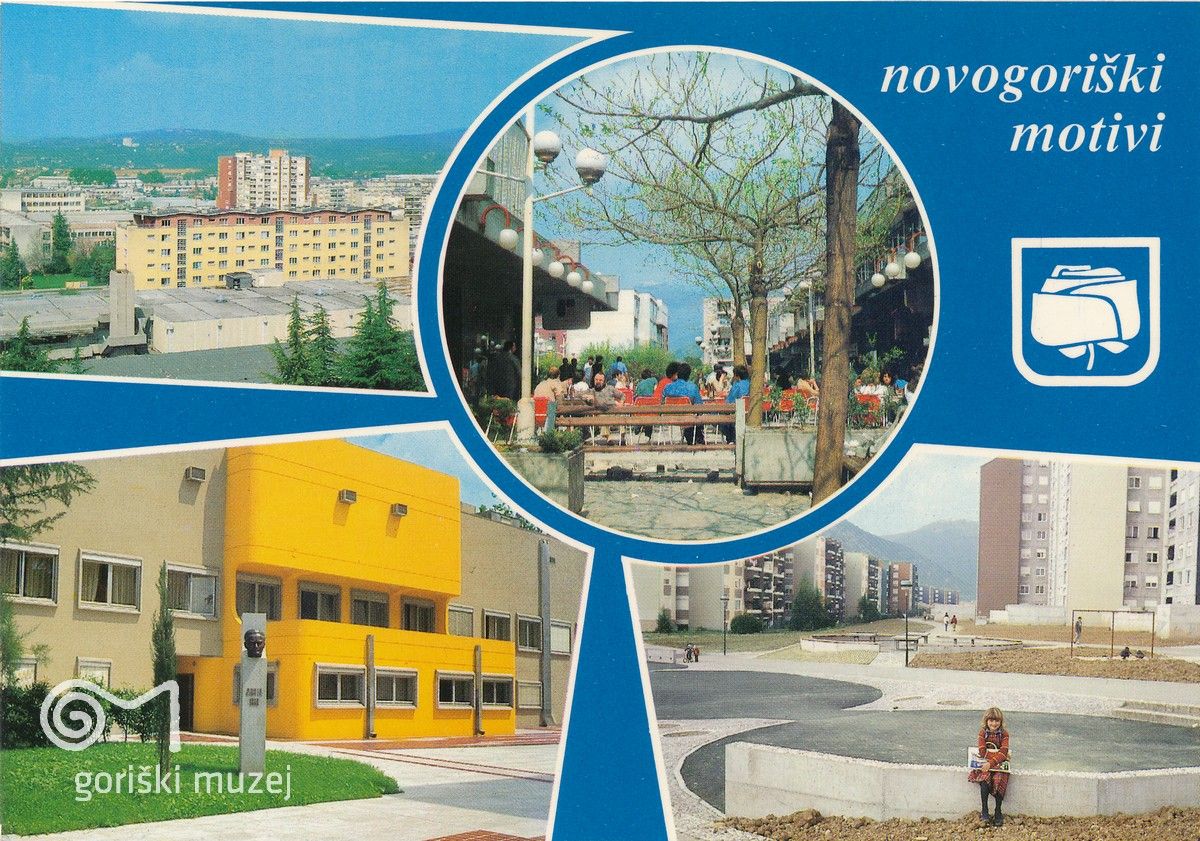
Nova Gorica Impressions, 1982 ©Postcard from the collection of Goriški muzej Kromberk - Nova Gorica (Goriška museum)
3 / 6
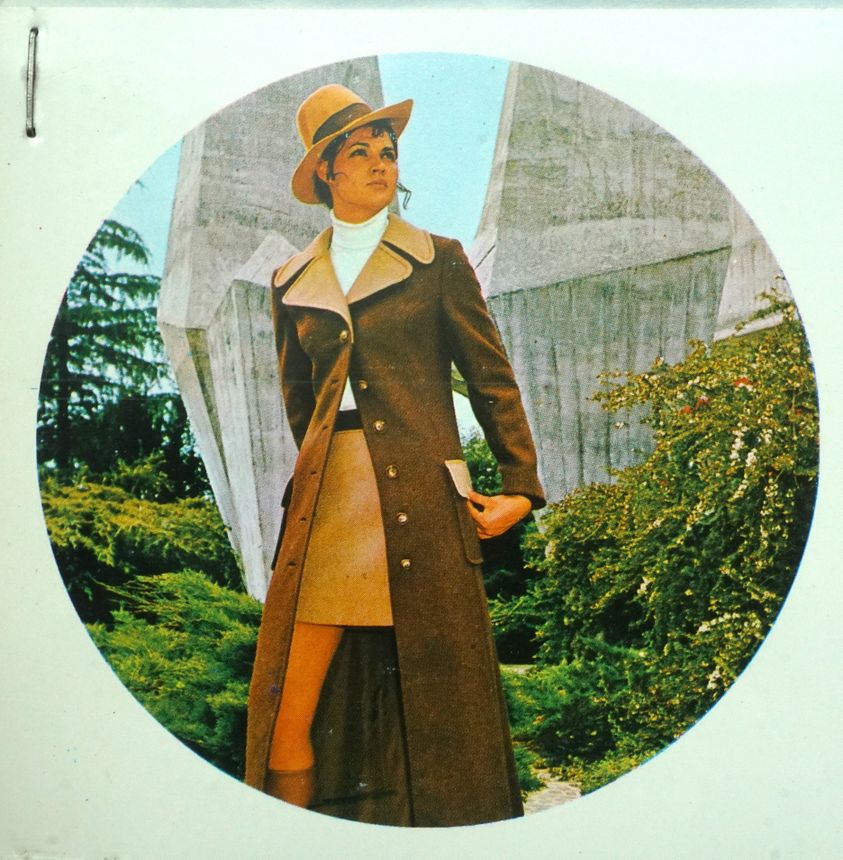
©From the collection of Regional Archive in Nova Gorica - PANG 0614 Modna konfekcija Ideal Nova Gorica, t.e. 18
4 / 6
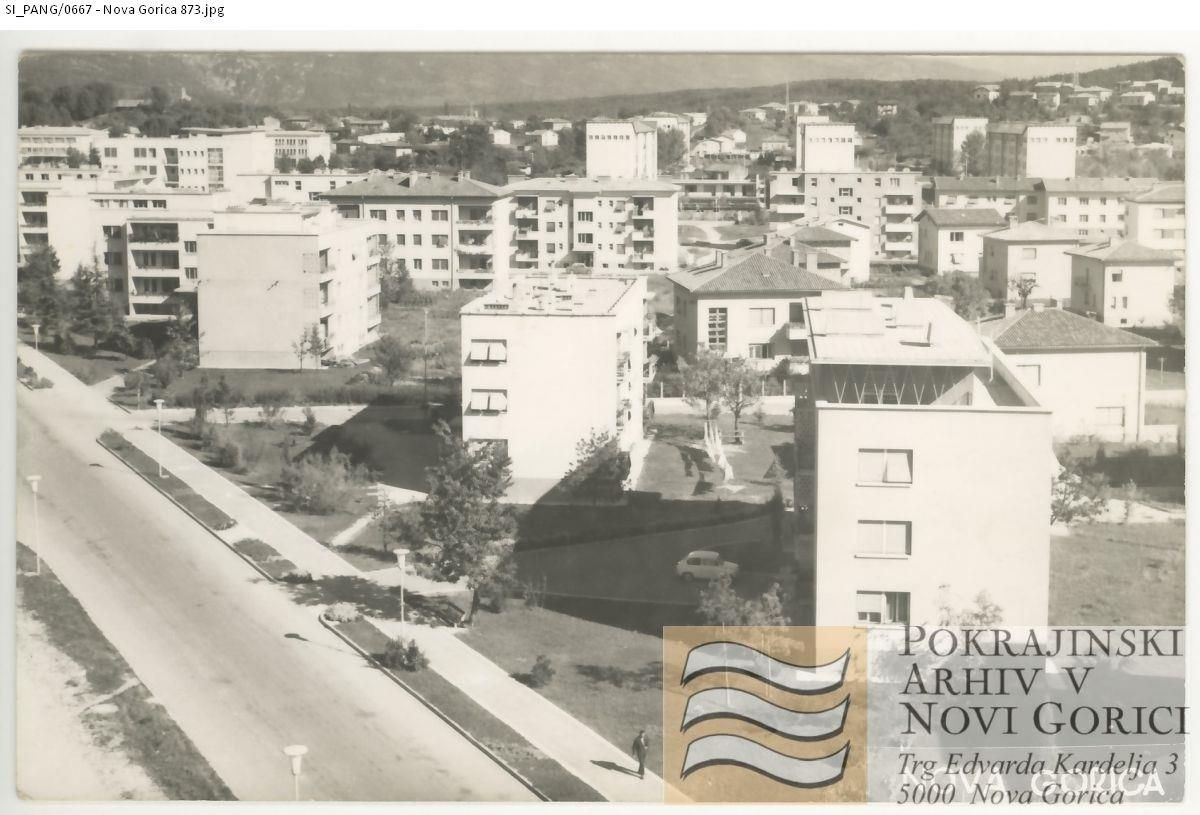
©From the collection of Regional Archive in Nova Gorica - PANG 667 Zbirke razglednic krajev Nova Gorica
5 / 6
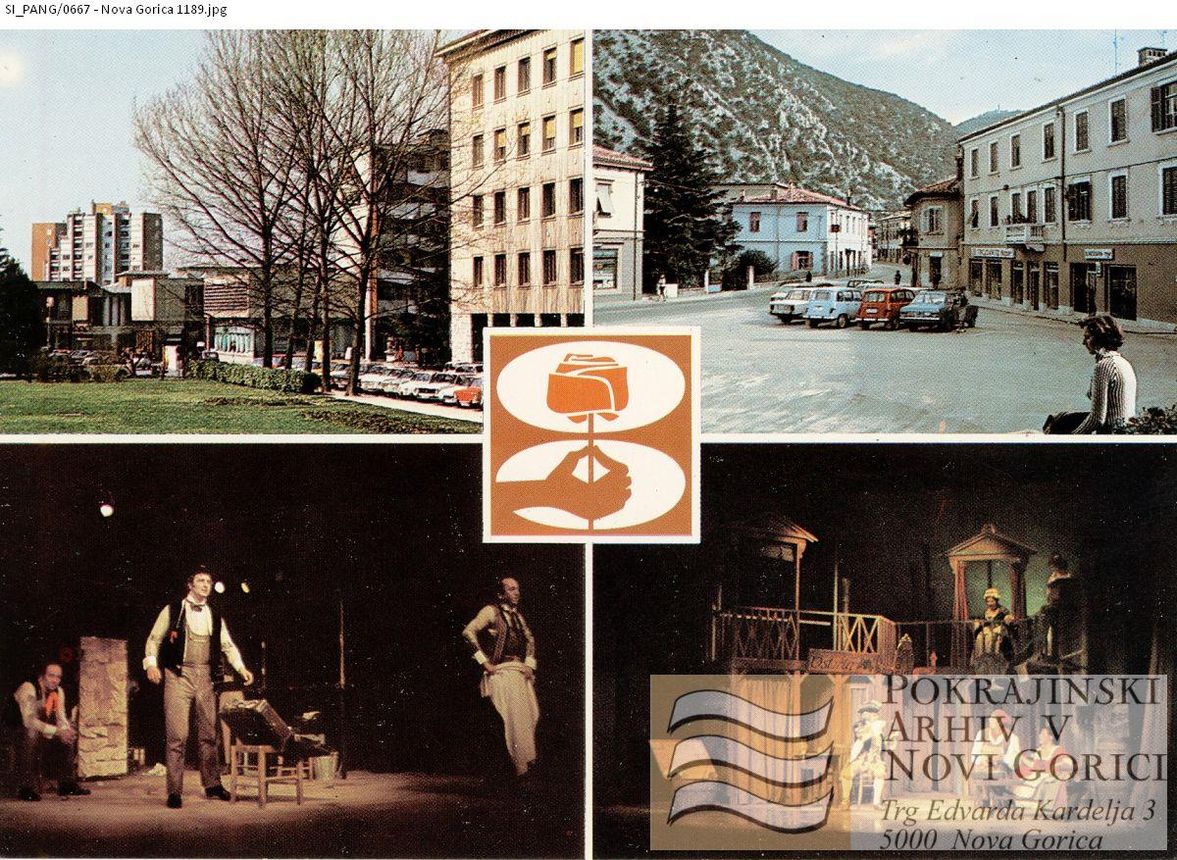
©From the collection of Regional Archive in Nova Gorica - PANG 667 Zbirke razglednic krajev Nova Gorica
6 / 6
When was the Municipality of Nova Gorica established? How did its boundaries change? And how many people live in the city today?
On 16 September 1947, following the decree extending the validity of the constitution, laws, and legal regulations to territories annexed to Yugoslavia after the peace treaty, local elections were held in the Primorska region. Newly annexed areas received new local authorities. This also applied to the Local People’s Committee of Solkan (5 December 1947), whose territory covered the area where Nova Gorica would later develop. The Solkan committee thus formed the core from which the Municipality of Nova Gorica gradually emerged. For early residents, Solkan also served as a centre for shopping, cultural life, and other activities.
The name Nova Gorica was first officially mentioned on 7 November 1949, as a settlement within the Local (Municipal) People’s Committee of Solkan. The Municipality of Nova Gorica was formally established under the Law on the Administrative Division of the People’s Republic of Slovenia into cities, districts, and municipalities, effective from 19 April 1952. “This date can be considered the birth of the Municipality of Nova Gorica as a town municipality with special rights” (Municipality of Nova Gorica 1947–1977, 1977: 10).
In 1955, with the annexation of the Tolmin district (the Idrija district had already been incorporated in 1952), Nova Gorica became the centre of the large Gorizia district, assuming the role of a regional hub. At the end of 1962, the Gorizia district was abolished and merged into the Koper district. In 1960 and 1961, additional municipalities joined Nova Gorica, including those with seats in Šempeter pri Gorici, Dobrovo, and Kanal ob Soči. After the abolition of the Koper district, a newly elected Municipal Assembly of Nova Gorica was constituted in April 1965. The municipality’s development relied largely on local initiatives.
The City Municipality of Nova Gorica was formally established in 1994 as one of eleven urban municipalities in Slovenia, within the framework of post-independence local government reform. Municipalities gained greater autonomy and were no longer merely extensions of state authority. At the same time, the territory of Nova Gorica began to shrink: first with the creation of the municipalities of Brda and Kanal ob Soči (1994), followed by Šempeter–Vrtojba (1998), Miren–Kostanjevica (2004), and Renče–Vogrsko (2006).
Nova Gorica has retained its formal—and partly informal—role as the regional centre of northern Primorska, though within a smaller territory than the former Gorizia district, roughly corresponding to the Slovenian part of the former Habsburg County of Gorizia.
Today, the municipality belongs to the Gorizia statistical region, which comprises 12 municipalities. The City Municipality of Nova Gorica covers 279.5 km² and has nearly 32,000 inhabitants across 19 local communities. According to 2024 data, the city of Nova Gorica itself has around 13,043 residents, while the municipality has 31,956 inhabitants.
The city includes the following districts and areas: Ledine (Cankarjevo naselje), Grčna, Barje, Ošljek, Ščedne, a smaller (western) part of Kromberk (Pri Hrastu), part of the Kostanjevica hill with the Franciscan monastery, the north-western slope of Panovec, and the border area with the railway station and industrial zone to the west.
Avtor: Jasna Fakin Bajec
Kraj: Nova Gorica
Vir:
- Občina Nova Gorica 1947-1977. Nova Gorica: GP Soča.
- Marušič, Branko. 2020. O Novi Gorici in o okoliščinah njenega nastajanja, Izvestje 17, str. 3-16.